

General knowledge
General knowledge
Can You Trust Wikipedia?
Can You Trust Wikipedia?
Dec 15, 2025
Can We Still Trust Wikipedia? – PragerU (Ashley Rindsberg)

Wikipedia is the most widely used source of information in human history.
Think about it: when you Google almost anything — from historical events to current affairs — Wikipedia dominates the results.
Google ranks Wikipedia pages in the first spot on 80% of searches, and even uses its articles to populate the “knowledge panels” that appear next to those searches.
With this kind of reach, we’d all want Wikipedia to be fair, objective, and accurate.
And if you’re researching Roman emperors, Newton’s laws, or Beethoven’s Fifth Symphony, it usually is.
But when it comes to contemporary political and social issues, Wikipedia has become something else entirely:
a battlefield where ideology outranks accuracy.
From Information to Ideology
If you look up topics like immigration, climate change, or international conflicts, you’ll find not neutral information, but carefully crafted narratives.
Wikipedia is no longer fair, objective, or accurate.
How did this happen?
Through coordinated groups of editors who control what information stays — and what gets deleted.
Anyone who challenges their preferred narrative gets shut down.
On issue after issue, only one point of view is allowed.
Case Study: Israel
Take Israel.
Over the past few years, a group of about 40 anti-Israel editors has worked systematically to delegitimize the Jewish state and whitewash the crimes of Hamas and other terrorist groups.
These editors have:
Erased historical ties between the Jewish people and Israel from dozens of articles.
Twisted the definition of Zionism from “the call for restoration of the Jewish homeland” to “a colonization project by European Jews.”
Tainted nearly every Israel-related topic.
For example, two editors from this group wrote over 90% of the content for an article they created called “Zionism, Race, and Genetics” — an entry comparing Zionism to Nazi race science.
Their campaign doesn’t stop with Israel.
They also whitewash Islamist atrocities.
One editor removed mention of Hamas’s genocidal charter.
Others tried to deny the atrocities of the October 7, 2023 massacre.
Working together, some deleted dozens of documented human-rights abuses committed by the Islamic Republic of Iran.
It’s Not Just About Israel
Wikipedia’s bias now extends far beyond the Middle East.
Articles on American politics, racism, transgenderism, and other sensitive subjects have been similarly manipulated.
Wikipedia wasn’t always like this.
There was a time, not long ago, when it was actually neutral.
So what changed?
2016: The Turning Point
When Donald Trump defeated Hillary Clinton, the left didn’t just lose an election — it lost its mind.
Clinton blamed her loss on “Russian disinformation” and declared a “fake news epidemic” before Congress.
For the left, the message was clear: control the internet or lose again.
Enter the Wikimedia Foundation (WMF) — Wikipedia’s parent organization.
It saw an opportunity.
Executive Director Katherine Maher declared that “Wikipedia’s neutrality is a white male, Westernized construct.”
Her solution was something called the “Wikipedia Movement Strategy.”
Its mission wasn’t subtle: transform Wikipedia from an encyclopedia into a social justice platform.
Internal WMF documents from that period — now public — show a deliberate shift toward what it called “knowledge equity.”
That meant prioritizing certain political perspectives over others.
Follow the Money
This ideological transformation required tens of millions of dollars.
They got it.
A large portion came from the Tides Foundation, funded by progressive billionaire George Soros.
His affiliates now fill Wikipedia’s leadership ranks.
They, in turn, empowered the left-wing editors who now control the site’s narrative — a narrative that is anti-American, anti-Israel, anti-Western, and anti-Christian.
The Reach Beyond Wikipedia
Unfortunately, Wikipedia’s influence doesn’t stop at its own website.
That would be bad enough.
Every major AI system — from ChatGPT to Google’s Gemini — feeds on Wikipedia’s massive database.
That means the future of unbiased information is in jeopardy.
Because once Wikipedia’s bias is embedded into AI systems, it becomes nearly impossible to detect.
Every student writing a paper, every journalist fact-checking a story, every policymaker researching an issue —
they’re all using Wikipedia, whether they know it or not.
What Can Be Done
So how can we bring Wikipedia back to its original mission?
First, by calling it out.
If you see something wrong, say something — on social media, in articles, in conversations.
Expose the bias.
The concept behind Wikipedia was brilliant:
a decentralized, crowdsourced encyclopedia — countless contributors, each fact-checking one another.
We must demand a return to that model.
Until that happens, it’s up to us to seek out alternative sources and become our own fact-checkers.
We can’t outsource that responsibility — least of all to Wikipedia.
— Ashley Rindsberg, Senior Editor at Pirate Wires, for Prager University.
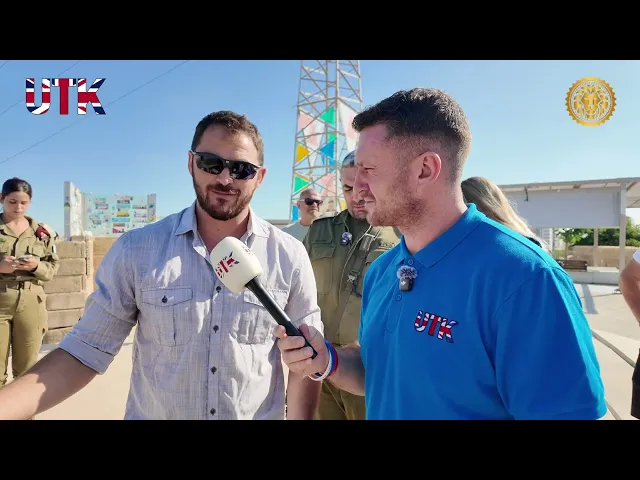
A former paratrooper and reserve commander takes us from the frontlines to the world stage — describing life in Sderot, fighting inside Gaza (Machon Al-Quds, Nuseirat, Beit Hanoun) and the trauma of October 7. He explains how close Gaza is to Israeli towns, recalls the 2005 Gush Katif withdrawal, and shares raw, personal scenes from months spent in active combat — then returning home to face a different battle: the rise of antisemitism worldwide. What you’ll hear in this video: • A frontline commander’s personal testimony about October 7 and the months that followed. • Firsthand descriptions of operations in Gaza (Nuseirat, Beit Hanoun) and daily threats from tunnels and armed militants. • Reflections on the 2005 Gaza withdrawal (Gush Katif) and what it meant for local communities. • The psychological shift from military duty back to civilian life and confronting global antisemitism.
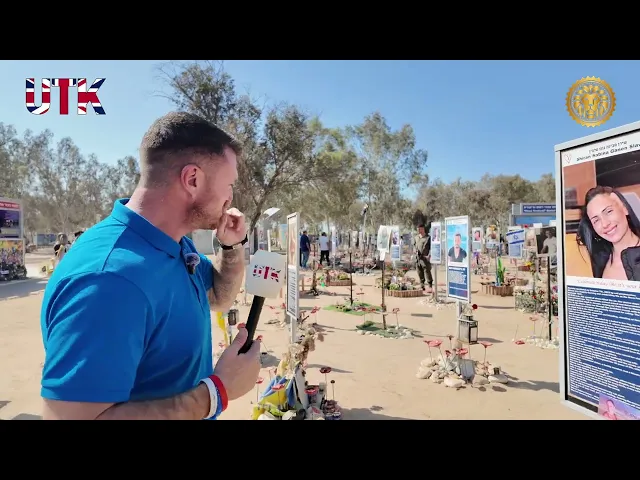
Tommy Robinson visits Re’im, the site of the Nova Festival massacre, during the two-year memorial of the October 7th atrocities. Hear the harrowing first-hand testimonies of survivors and witnesses as they recount what truly happened when Hamas terrorists attacked innocent festivalgoers. This is the raw, unfiltered truth of that dark day, as told by those who lived through it.

After watching previously unseen footage showing the massacre of 110 innocent people by Hamas on October 7th, Tommy Robinson shares his raw reaction and reflections. He speaks about what he witnessed, the mindset behind the attacks, and how the reality on the ground in Israel differs from what much of the media shows. This is not easy to watch — but it’s an honest account of what he saw and why he believes the world needs to understand the true nature of this conflict.

Today I visited the Kibbutz closest to the Gaza border. Where some 5,000 Hamas jihadist scum launched their attack on Israeli citizens on October 7th. I speak to this brave gentleman, Thomas Hand, whose 8 year old daughter was kidnapped by the terror group that day. Listen to the harrowing testimony of a father, one story, amongst thousands. Thank you for sharing your experience Thomas. This video is not for the feint of heart.
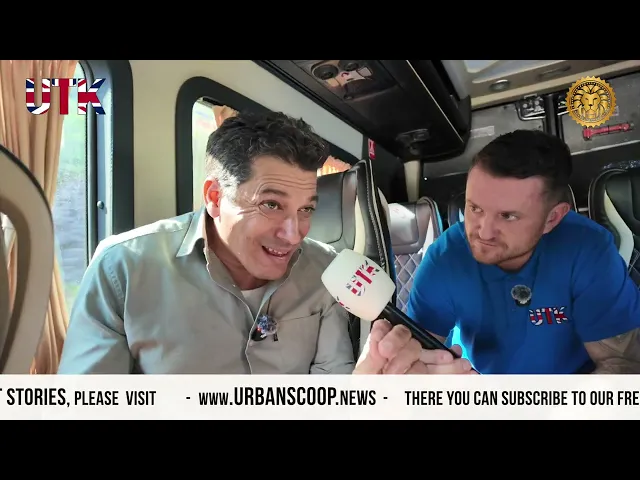
In this explosive interview, Amichai Chikli Minister of Diaspora Affairs of Israel delivers a powerful warning about the rise of radical Islam and the Muslim Brotherhood’s dangerous global ambitions, from establishing a Caliphate to imposing Sharia law across Europe and beyond. He slams the UK’s Labour government under Keir Starmer for its "fear-driven" approach to extremism, drawing chilling parallels to appeasement tactics before WWII. Discover why he believes Britain must act decisively to avoid a catastrophic wake-up call. Join the conversation on this critical fight for freedom and democracy!
A former paratrooper and reserve commander takes us from the frontlines to the world stage — describing life in Sderot, fighting inside Gaza (Machon Al-Quds, Nuseirat, Beit Hanoun) and the trauma of October 7. He explains how close Gaza is to Israeli towns, recalls the 2005 Gush Katif withdrawal, and shares raw, personal scenes from months spent in active combat — then returning home to face a different battle: the rise of antisemitism worldwide. What you’ll hear in this video: • A frontline commander’s personal testimony about October 7 and the months that followed. • Firsthand descriptions of operations in Gaza (Nuseirat, Beit Hanoun) and daily threats from tunnels and armed militants. • Reflections on the 2005 Gaza withdrawal (Gush Katif) and what it meant for local communities. • The psychological shift from military duty back to civilian life and confronting global antisemitism.
Tommy Robinson visits Re’im, the site of the Nova Festival massacre, during the two-year memorial of the October 7th atrocities. Hear the harrowing first-hand testimonies of survivors and witnesses as they recount what truly happened when Hamas terrorists attacked innocent festivalgoers. This is the raw, unfiltered truth of that dark day, as told by those who lived through it.
After watching previously unseen footage showing the massacre of 110 innocent people by Hamas on October 7th, Tommy Robinson shares his raw reaction and reflections. He speaks about what he witnessed, the mindset behind the attacks, and how the reality on the ground in Israel differs from what much of the media shows. This is not easy to watch — but it’s an honest account of what he saw and why he believes the world needs to understand the true nature of this conflict.
Today I visited the Kibbutz closest to the Gaza border. Where some 5,000 Hamas jihadist scum launched their attack on Israeli citizens on October 7th. I speak to this brave gentleman, Thomas Hand, whose 8 year old daughter was kidnapped by the terror group that day. Listen to the harrowing testimony of a father, one story, amongst thousands. Thank you for sharing your experience Thomas. This video is not for the feint of heart.
In this explosive interview, Amichai Chikli Minister of Diaspora Affairs of Israel delivers a powerful warning about the rise of radical Islam and the Muslim Brotherhood’s dangerous global ambitions, from establishing a Caliphate to imposing Sharia law across Europe and beyond. He slams the UK’s Labour government under Keir Starmer for its "fear-driven" approach to extremism, drawing chilling parallels to appeasement tactics before WWII. Discover why he believes Britain must act decisively to avoid a catastrophic wake-up call. Join the conversation on this critical fight for freedom and democracy!
A former paratrooper and reserve commander takes us from the frontlines to the world stage — describing life in Sderot, fighting inside Gaza (Machon Al-Quds, Nuseirat, Beit Hanoun) and the trauma of October 7. He explains how close Gaza is to Israeli towns, recalls the 2005 Gush Katif withdrawal, and shares raw, personal scenes from months spent in active combat — then returning home to face a different battle: the rise of antisemitism worldwide. What you’ll hear in this video: • A frontline commander’s personal testimony about October 7 and the months that followed. • Firsthand descriptions of operations in Gaza (Nuseirat, Beit Hanoun) and daily threats from tunnels and armed militants. • Reflections on the 2005 Gaza withdrawal (Gush Katif) and what it meant for local communities. • The psychological shift from military duty back to civilian life and confronting global antisemitism.
Tommy Robinson visits Re’im, the site of the Nova Festival massacre, during the two-year memorial of the October 7th atrocities. Hear the harrowing first-hand testimonies of survivors and witnesses as they recount what truly happened when Hamas terrorists attacked innocent festivalgoers. This is the raw, unfiltered truth of that dark day, as told by those who lived through it.
After watching previously unseen footage showing the massacre of 110 innocent people by Hamas on October 7th, Tommy Robinson shares his raw reaction and reflections. He speaks about what he witnessed, the mindset behind the attacks, and how the reality on the ground in Israel differs from what much of the media shows. This is not easy to watch — but it’s an honest account of what he saw and why he believes the world needs to understand the true nature of this conflict.
Today I visited the Kibbutz closest to the Gaza border. Where some 5,000 Hamas jihadist scum launched their attack on Israeli citizens on October 7th. I speak to this brave gentleman, Thomas Hand, whose 8 year old daughter was kidnapped by the terror group that day. Listen to the harrowing testimony of a father, one story, amongst thousands. Thank you for sharing your experience Thomas. This video is not for the feint of heart.
In this explosive interview, Amichai Chikli Minister of Diaspora Affairs of Israel delivers a powerful warning about the rise of radical Islam and the Muslim Brotherhood’s dangerous global ambitions, from establishing a Caliphate to imposing Sharia law across Europe and beyond. He slams the UK’s Labour government under Keir Starmer for its "fear-driven" approach to extremism, drawing chilling parallels to appeasement tactics before WWII. Discover why he believes Britain must act decisively to avoid a catastrophic wake-up call. Join the conversation on this critical fight for freedom and democracy!
A former paratrooper and reserve commander takes us from the frontlines to the world stage — describing life in Sderot, fighting inside Gaza (Machon Al-Quds, Nuseirat, Beit Hanoun) and the trauma of October 7. He explains how close Gaza is to Israeli towns, recalls the 2005 Gush Katif withdrawal, and shares raw, personal scenes from months spent in active combat — then returning home to face a different battle: the rise of antisemitism worldwide. What you’ll hear in this video: • A frontline commander’s personal testimony about October 7 and the months that followed. • Firsthand descriptions of operations in Gaza (Nuseirat, Beit Hanoun) and daily threats from tunnels and armed militants. • Reflections on the 2005 Gaza withdrawal (Gush Katif) and what it meant for local communities. • The psychological shift from military duty back to civilian life and confronting global antisemitism.
Tommy Robinson visits Re’im, the site of the Nova Festival massacre, during the two-year memorial of the October 7th atrocities. Hear the harrowing first-hand testimonies of survivors and witnesses as they recount what truly happened when Hamas terrorists attacked innocent festivalgoers. This is the raw, unfiltered truth of that dark day, as told by those who lived through it.
After watching previously unseen footage showing the massacre of 110 innocent people by Hamas on October 7th, Tommy Robinson shares his raw reaction and reflections. He speaks about what he witnessed, the mindset behind the attacks, and how the reality on the ground in Israel differs from what much of the media shows. This is not easy to watch — but it’s an honest account of what he saw and why he believes the world needs to understand the true nature of this conflict.
Today I visited the Kibbutz closest to the Gaza border. Where some 5,000 Hamas jihadist scum launched their attack on Israeli citizens on October 7th. I speak to this brave gentleman, Thomas Hand, whose 8 year old daughter was kidnapped by the terror group that day. Listen to the harrowing testimony of a father, one story, amongst thousands. Thank you for sharing your experience Thomas. This video is not for the feint of heart.
In this explosive interview, Amichai Chikli Minister of Diaspora Affairs of Israel delivers a powerful warning about the rise of radical Islam and the Muslim Brotherhood’s dangerous global ambitions, from establishing a Caliphate to imposing Sharia law across Europe and beyond. He slams the UK’s Labour government under Keir Starmer for its "fear-driven" approach to extremism, drawing chilling parallels to appeasement tactics before WWII. Discover why he believes Britain must act decisively to avoid a catastrophic wake-up call. Join the conversation on this critical fight for freedom and democracy!
A former paratrooper and reserve commander takes us from the frontlines to the world stage — describing life in Sderot, fighting inside Gaza (Machon Al-Quds, Nuseirat, Beit Hanoun) and the trauma of October 7. He explains how close Gaza is to Israeli towns, recalls the 2005 Gush Katif withdrawal, and shares raw, personal scenes from months spent in active combat — then returning home to face a different battle: the rise of antisemitism worldwide. What you’ll hear in this video: • A frontline commander’s personal testimony about October 7 and the months that followed. • Firsthand descriptions of operations in Gaza (Nuseirat, Beit Hanoun) and daily threats from tunnels and armed militants. • Reflections on the 2005 Gaza withdrawal (Gush Katif) and what it meant for local communities. • The psychological shift from military duty back to civilian life and confronting global antisemitism.
Tommy Robinson visits Re’im, the site of the Nova Festival massacre, during the two-year memorial of the October 7th atrocities. Hear the harrowing first-hand testimonies of survivors and witnesses as they recount what truly happened when Hamas terrorists attacked innocent festivalgoers. This is the raw, unfiltered truth of that dark day, as told by those who lived through it.
After watching previously unseen footage showing the massacre of 110 innocent people by Hamas on October 7th, Tommy Robinson shares his raw reaction and reflections. He speaks about what he witnessed, the mindset behind the attacks, and how the reality on the ground in Israel differs from what much of the media shows. This is not easy to watch — but it’s an honest account of what he saw and why he believes the world needs to understand the true nature of this conflict.
Today I visited the Kibbutz closest to the Gaza border. Where some 5,000 Hamas jihadist scum launched their attack on Israeli citizens on October 7th. I speak to this brave gentleman, Thomas Hand, whose 8 year old daughter was kidnapped by the terror group that day. Listen to the harrowing testimony of a father, one story, amongst thousands. Thank you for sharing your experience Thomas. This video is not for the feint of heart.
In this explosive interview, Amichai Chikli Minister of Diaspora Affairs of Israel delivers a powerful warning about the rise of radical Islam and the Muslim Brotherhood’s dangerous global ambitions, from establishing a Caliphate to imposing Sharia law across Europe and beyond. He slams the UK’s Labour government under Keir Starmer for its "fear-driven" approach to extremism, drawing chilling parallels to appeasement tactics before WWII. Discover why he believes Britain must act decisively to avoid a catastrophic wake-up call. Join the conversation on this critical fight for freedom and democracy!
A former paratrooper and reserve commander takes us from the frontlines to the world stage — describing life in Sderot, fighting inside Gaza (Machon Al-Quds, Nuseirat, Beit Hanoun) and the trauma of October 7. He explains how close Gaza is to Israeli towns, recalls the 2005 Gush Katif withdrawal, and shares raw, personal scenes from months spent in active combat — then returning home to face a different battle: the rise of antisemitism worldwide. What you’ll hear in this video: • A frontline commander’s personal testimony about October 7 and the months that followed. • Firsthand descriptions of operations in Gaza (Nuseirat, Beit Hanoun) and daily threats from tunnels and armed militants. • Reflections on the 2005 Gaza withdrawal (Gush Katif) and what it meant for local communities. • The psychological shift from military duty back to civilian life and confronting global antisemitism.
Tommy Robinson visits Re’im, the site of the Nova Festival massacre, during the two-year memorial of the October 7th atrocities. Hear the harrowing first-hand testimonies of survivors and witnesses as they recount what truly happened when Hamas terrorists attacked innocent festivalgoers. This is the raw, unfiltered truth of that dark day, as told by those who lived through it.
After watching previously unseen footage showing the massacre of 110 innocent people by Hamas on October 7th, Tommy Robinson shares his raw reaction and reflections. He speaks about what he witnessed, the mindset behind the attacks, and how the reality on the ground in Israel differs from what much of the media shows. This is not easy to watch — but it’s an honest account of what he saw and why he believes the world needs to understand the true nature of this conflict.
Today I visited the Kibbutz closest to the Gaza border. Where some 5,000 Hamas jihadist scum launched their attack on Israeli citizens on October 7th. I speak to this brave gentleman, Thomas Hand, whose 8 year old daughter was kidnapped by the terror group that day. Listen to the harrowing testimony of a father, one story, amongst thousands. Thank you for sharing your experience Thomas. This video is not for the feint of heart.
In this explosive interview, Amichai Chikli Minister of Diaspora Affairs of Israel delivers a powerful warning about the rise of radical Islam and the Muslim Brotherhood’s dangerous global ambitions, from establishing a Caliphate to imposing Sharia law across Europe and beyond. He slams the UK’s Labour government under Keir Starmer for its "fear-driven" approach to extremism, drawing chilling parallels to appeasement tactics before WWII. Discover why he believes Britain must act decisively to avoid a catastrophic wake-up call. Join the conversation on this critical fight for freedom and democracy!
A former paratrooper and reserve commander takes us from the frontlines to the world stage — describing life in Sderot, fighting inside Gaza (Machon Al-Quds, Nuseirat, Beit Hanoun) and the trauma of October 7. He explains how close Gaza is to Israeli towns, recalls the 2005 Gush Katif withdrawal, and shares raw, personal scenes from months spent in active combat — then returning home to face a different battle: the rise of antisemitism worldwide. What you’ll hear in this video: • A frontline commander’s personal testimony about October 7 and the months that followed. • Firsthand descriptions of operations in Gaza (Nuseirat, Beit Hanoun) and daily threats from tunnels and armed militants. • Reflections on the 2005 Gaza withdrawal (Gush Katif) and what it meant for local communities. • The psychological shift from military duty back to civilian life and confronting global antisemitism.
Tommy Robinson visits Re’im, the site of the Nova Festival massacre, during the two-year memorial of the October 7th atrocities. Hear the harrowing first-hand testimonies of survivors and witnesses as they recount what truly happened when Hamas terrorists attacked innocent festivalgoers. This is the raw, unfiltered truth of that dark day, as told by those who lived through it.
After watching previously unseen footage showing the massacre of 110 innocent people by Hamas on October 7th, Tommy Robinson shares his raw reaction and reflections. He speaks about what he witnessed, the mindset behind the attacks, and how the reality on the ground in Israel differs from what much of the media shows. This is not easy to watch — but it’s an honest account of what he saw and why he believes the world needs to understand the true nature of this conflict.
Today I visited the Kibbutz closest to the Gaza border. Where some 5,000 Hamas jihadist scum launched their attack on Israeli citizens on October 7th. I speak to this brave gentleman, Thomas Hand, whose 8 year old daughter was kidnapped by the terror group that day. Listen to the harrowing testimony of a father, one story, amongst thousands. Thank you for sharing your experience Thomas. This video is not for the feint of heart.
In this explosive interview, Amichai Chikli Minister of Diaspora Affairs of Israel delivers a powerful warning about the rise of radical Islam and the Muslim Brotherhood’s dangerous global ambitions, from establishing a Caliphate to imposing Sharia law across Europe and beyond. He slams the UK’s Labour government under Keir Starmer for its "fear-driven" approach to extremism, drawing chilling parallels to appeasement tactics before WWII. Discover why he believes Britain must act decisively to avoid a catastrophic wake-up call. Join the conversation on this critical fight for freedom and democracy!
A former paratrooper and reserve commander takes us from the frontlines to the world stage — describing life in Sderot, fighting inside Gaza (Machon Al-Quds, Nuseirat, Beit Hanoun) and the trauma of October 7. He explains how close Gaza is to Israeli towns, recalls the 2005 Gush Katif withdrawal, and shares raw, personal scenes from months spent in active combat — then returning home to face a different battle: the rise of antisemitism worldwide. What you’ll hear in this video: • A frontline commander’s personal testimony about October 7 and the months that followed. • Firsthand descriptions of operations in Gaza (Nuseirat, Beit Hanoun) and daily threats from tunnels and armed militants. • Reflections on the 2005 Gaza withdrawal (Gush Katif) and what it meant for local communities. • The psychological shift from military duty back to civilian life and confronting global antisemitism.
Tommy Robinson visits Re’im, the site of the Nova Festival massacre, during the two-year memorial of the October 7th atrocities. Hear the harrowing first-hand testimonies of survivors and witnesses as they recount what truly happened when Hamas terrorists attacked innocent festivalgoers. This is the raw, unfiltered truth of that dark day, as told by those who lived through it.
After watching previously unseen footage showing the massacre of 110 innocent people by Hamas on October 7th, Tommy Robinson shares his raw reaction and reflections. He speaks about what he witnessed, the mindset behind the attacks, and how the reality on the ground in Israel differs from what much of the media shows. This is not easy to watch — but it’s an honest account of what he saw and why he believes the world needs to understand the true nature of this conflict.
Today I visited the Kibbutz closest to the Gaza border. Where some 5,000 Hamas jihadist scum launched their attack on Israeli citizens on October 7th. I speak to this brave gentleman, Thomas Hand, whose 8 year old daughter was kidnapped by the terror group that day. Listen to the harrowing testimony of a father, one story, amongst thousands. Thank you for sharing your experience Thomas. This video is not for the feint of heart.
In this explosive interview, Amichai Chikli Minister of Diaspora Affairs of Israel delivers a powerful warning about the rise of radical Islam and the Muslim Brotherhood’s dangerous global ambitions, from establishing a Caliphate to imposing Sharia law across Europe and beyond. He slams the UK’s Labour government under Keir Starmer for its "fear-driven" approach to extremism, drawing chilling parallels to appeasement tactics before WWII. Discover why he believes Britain must act decisively to avoid a catastrophic wake-up call. Join the conversation on this critical fight for freedom and democracy!
A former paratrooper and reserve commander takes us from the frontlines to the world stage — describing life in Sderot, fighting inside Gaza (Machon Al-Quds, Nuseirat, Beit Hanoun) and the trauma of October 7. He explains how close Gaza is to Israeli towns, recalls the 2005 Gush Katif withdrawal, and shares raw, personal scenes from months spent in active combat — then returning home to face a different battle: the rise of antisemitism worldwide. What you’ll hear in this video: • A frontline commander’s personal testimony about October 7 and the months that followed. • Firsthand descriptions of operations in Gaza (Nuseirat, Beit Hanoun) and daily threats from tunnels and armed militants. • Reflections on the 2005 Gaza withdrawal (Gush Katif) and what it meant for local communities. • The psychological shift from military duty back to civilian life and confronting global antisemitism.
Tommy Robinson visits Re’im, the site of the Nova Festival massacre, during the two-year memorial of the October 7th atrocities. Hear the harrowing first-hand testimonies of survivors and witnesses as they recount what truly happened when Hamas terrorists attacked innocent festivalgoers. This is the raw, unfiltered truth of that dark day, as told by those who lived through it.
After watching previously unseen footage showing the massacre of 110 innocent people by Hamas on October 7th, Tommy Robinson shares his raw reaction and reflections. He speaks about what he witnessed, the mindset behind the attacks, and how the reality on the ground in Israel differs from what much of the media shows. This is not easy to watch — but it’s an honest account of what he saw and why he believes the world needs to understand the true nature of this conflict.
Today I visited the Kibbutz closest to the Gaza border. Where some 5,000 Hamas jihadist scum launched their attack on Israeli citizens on October 7th. I speak to this brave gentleman, Thomas Hand, whose 8 year old daughter was kidnapped by the terror group that day. Listen to the harrowing testimony of a father, one story, amongst thousands. Thank you for sharing your experience Thomas. This video is not for the feint of heart.
In this explosive interview, Amichai Chikli Minister of Diaspora Affairs of Israel delivers a powerful warning about the rise of radical Islam and the Muslim Brotherhood’s dangerous global ambitions, from establishing a Caliphate to imposing Sharia law across Europe and beyond. He slams the UK’s Labour government under Keir Starmer for its "fear-driven" approach to extremism, drawing chilling parallels to appeasement tactics before WWII. Discover why he believes Britain must act decisively to avoid a catastrophic wake-up call. Join the conversation on this critical fight for freedom and democracy!
A former paratrooper and reserve commander takes us from the frontlines to the world stage — describing life in Sderot, fighting inside Gaza (Machon Al-Quds, Nuseirat, Beit Hanoun) and the trauma of October 7. He explains how close Gaza is to Israeli towns, recalls the 2005 Gush Katif withdrawal, and shares raw, personal scenes from months spent in active combat — then returning home to face a different battle: the rise of antisemitism worldwide. What you’ll hear in this video: • A frontline commander’s personal testimony about October 7 and the months that followed. • Firsthand descriptions of operations in Gaza (Nuseirat, Beit Hanoun) and daily threats from tunnels and armed militants. • Reflections on the 2005 Gaza withdrawal (Gush Katif) and what it meant for local communities. • The psychological shift from military duty back to civilian life and confronting global antisemitism.
Tommy Robinson visits Re’im, the site of the Nova Festival massacre, during the two-year memorial of the October 7th atrocities. Hear the harrowing first-hand testimonies of survivors and witnesses as they recount what truly happened when Hamas terrorists attacked innocent festivalgoers. This is the raw, unfiltered truth of that dark day, as told by those who lived through it.
After watching previously unseen footage showing the massacre of 110 innocent people by Hamas on October 7th, Tommy Robinson shares his raw reaction and reflections. He speaks about what he witnessed, the mindset behind the attacks, and how the reality on the ground in Israel differs from what much of the media shows. This is not easy to watch — but it’s an honest account of what he saw and why he believes the world needs to understand the true nature of this conflict.
Today I visited the Kibbutz closest to the Gaza border. Where some 5,000 Hamas jihadist scum launched their attack on Israeli citizens on October 7th. I speak to this brave gentleman, Thomas Hand, whose 8 year old daughter was kidnapped by the terror group that day. Listen to the harrowing testimony of a father, one story, amongst thousands. Thank you for sharing your experience Thomas. This video is not for the feint of heart.
In this explosive interview, Amichai Chikli Minister of Diaspora Affairs of Israel delivers a powerful warning about the rise of radical Islam and the Muslim Brotherhood’s dangerous global ambitions, from establishing a Caliphate to imposing Sharia law across Europe and beyond. He slams the UK’s Labour government under Keir Starmer for its "fear-driven" approach to extremism, drawing chilling parallels to appeasement tactics before WWII. Discover why he believes Britain must act decisively to avoid a catastrophic wake-up call. Join the conversation on this critical fight for freedom and democracy!
A former paratrooper and reserve commander takes us from the frontlines to the world stage — describing life in Sderot, fighting inside Gaza (Machon Al-Quds, Nuseirat, Beit Hanoun) and the trauma of October 7. He explains how close Gaza is to Israeli towns, recalls the 2005 Gush Katif withdrawal, and shares raw, personal scenes from months spent in active combat — then returning home to face a different battle: the rise of antisemitism worldwide. What you’ll hear in this video: • A frontline commander’s personal testimony about October 7 and the months that followed. • Firsthand descriptions of operations in Gaza (Nuseirat, Beit Hanoun) and daily threats from tunnels and armed militants. • Reflections on the 2005 Gaza withdrawal (Gush Katif) and what it meant for local communities. • The psychological shift from military duty back to civilian life and confronting global antisemitism.
Tommy Robinson visits Re’im, the site of the Nova Festival massacre, during the two-year memorial of the October 7th atrocities. Hear the harrowing first-hand testimonies of survivors and witnesses as they recount what truly happened when Hamas terrorists attacked innocent festivalgoers. This is the raw, unfiltered truth of that dark day, as told by those who lived through it.
After watching previously unseen footage showing the massacre of 110 innocent people by Hamas on October 7th, Tommy Robinson shares his raw reaction and reflections. He speaks about what he witnessed, the mindset behind the attacks, and how the reality on the ground in Israel differs from what much of the media shows. This is not easy to watch — but it’s an honest account of what he saw and why he believes the world needs to understand the true nature of this conflict.
Today I visited the Kibbutz closest to the Gaza border. Where some 5,000 Hamas jihadist scum launched their attack on Israeli citizens on October 7th. I speak to this brave gentleman, Thomas Hand, whose 8 year old daughter was kidnapped by the terror group that day. Listen to the harrowing testimony of a father, one story, amongst thousands. Thank you for sharing your experience Thomas. This video is not for the feint of heart.
In this explosive interview, Amichai Chikli Minister of Diaspora Affairs of Israel delivers a powerful warning about the rise of radical Islam and the Muslim Brotherhood’s dangerous global ambitions, from establishing a Caliphate to imposing Sharia law across Europe and beyond. He slams the UK’s Labour government under Keir Starmer for its "fear-driven" approach to extremism, drawing chilling parallels to appeasement tactics before WWII. Discover why he believes Britain must act decisively to avoid a catastrophic wake-up call. Join the conversation on this critical fight for freedom and democracy!
A former paratrooper and reserve commander takes us from the frontlines to the world stage — describing life in Sderot, fighting inside Gaza (Machon Al-Quds, Nuseirat, Beit Hanoun) and the trauma of October 7. He explains how close Gaza is to Israeli towns, recalls the 2005 Gush Katif withdrawal, and shares raw, personal scenes from months spent in active combat — then returning home to face a different battle: the rise of antisemitism worldwide. What you’ll hear in this video: • A frontline commander’s personal testimony about October 7 and the months that followed. • Firsthand descriptions of operations in Gaza (Nuseirat, Beit Hanoun) and daily threats from tunnels and armed militants. • Reflections on the 2005 Gaza withdrawal (Gush Katif) and what it meant for local communities. • The psychological shift from military duty back to civilian life and confronting global antisemitism.
Tommy Robinson visits Re’im, the site of the Nova Festival massacre, during the two-year memorial of the October 7th atrocities. Hear the harrowing first-hand testimonies of survivors and witnesses as they recount what truly happened when Hamas terrorists attacked innocent festivalgoers. This is the raw, unfiltered truth of that dark day, as told by those who lived through it.
After watching previously unseen footage showing the massacre of 110 innocent people by Hamas on October 7th, Tommy Robinson shares his raw reaction and reflections. He speaks about what he witnessed, the mindset behind the attacks, and how the reality on the ground in Israel differs from what much of the media shows. This is not easy to watch — but it’s an honest account of what he saw and why he believes the world needs to understand the true nature of this conflict.
Today I visited the Kibbutz closest to the Gaza border. Where some 5,000 Hamas jihadist scum launched their attack on Israeli citizens on October 7th. I speak to this brave gentleman, Thomas Hand, whose 8 year old daughter was kidnapped by the terror group that day. Listen to the harrowing testimony of a father, one story, amongst thousands. Thank you for sharing your experience Thomas. This video is not for the feint of heart.
In this explosive interview, Amichai Chikli Minister of Diaspora Affairs of Israel delivers a powerful warning about the rise of radical Islam and the Muslim Brotherhood’s dangerous global ambitions, from establishing a Caliphate to imposing Sharia law across Europe and beyond. He slams the UK’s Labour government under Keir Starmer for its "fear-driven" approach to extremism, drawing chilling parallels to appeasement tactics before WWII. Discover why he believes Britain must act decisively to avoid a catastrophic wake-up call. Join the conversation on this critical fight for freedom and democracy!

Contact Us
Contact Us
Writers, other artists who are interested in taking part, we are here for any request, question, or idea

About us
Lorem ipsum dolor sit amet, consectetur adipiscing elit. Aliquam sodales orci nec quam fringilla, in viverra nisl viverra. Pellentesque quis erat dolor. In elementum egestas fringilla.
Lorem ipsum dolor sit amet, consectetur adipiscing elit. Aliquam sodales orci nec quam fringilla, in viverra nisl viverra. Pellentesque quis erat dolor. In elementum egestas fringilla.
All rights reserved to Israel Digital Center | Official Website 2025
All rights reserved to Israel Digital Center | Official Website 2025
ISRAEL DIGITAL CENTER




Follow us
About us
Lorem ipsum dolor sit amet, consectetur adipiscing elit. Aliquam sodales orci nec quam fringilla, in viverra nisl viverra. Pellentesque quis erat dolor. In elementum egestas fringilla.
All rights reserved to Israel Digital Center
| Official Website 2025