



Dec 15, 2025
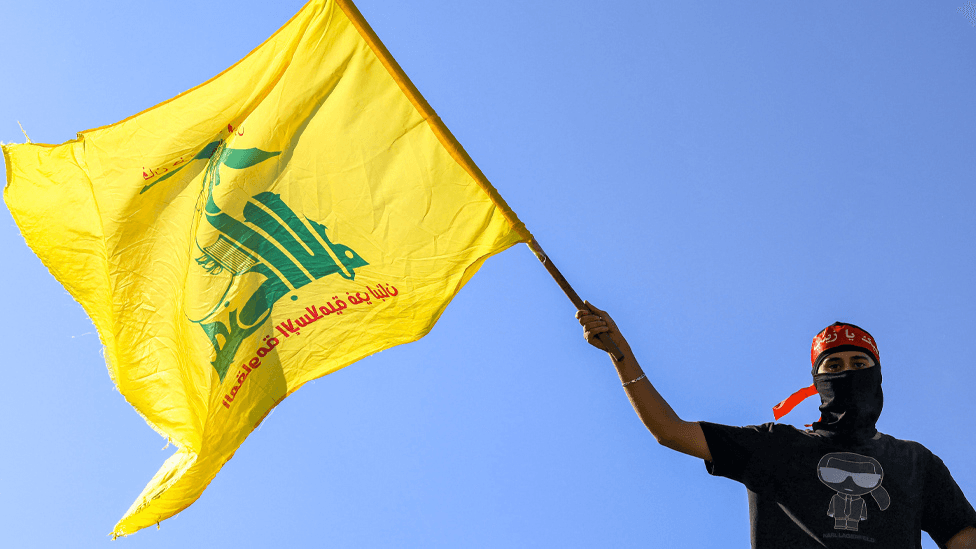
Hezbollah (Written by the Israel Digital Center. Date of writing: 20/03/25)
A state within a state: Hezbollah’s rise, ideology, and the war that reshaped its power.
Hezbollah is not just a terrorist organization; it is a state within a state, an army within an army, and Iran’s most powerful proxy outside its borders.
With more than 150,000 rockets, UAVs, drones, precision missiles, and tens of thousands of trained terrorists, Hezbollah stands as the most heavily armed non-state actor in the world.
The organization was founded in the early 1980s by Iran’s Revolutionary Guards to transform Lebanon into an Iranian client state and wage a continuous war against Israel.
Since then, Hezbollah has become Iran’s strongest branch in the Middle East, working to destabilize the region and advance Tehran’s expansionist ambitions.
Ideology
Hezbollah’s ideology is extreme and unambiguous, guided by three central principles:
Shiite Islamic Rule in Lebanon: The organization seeks to turn Lebanon into a Shiite state governed by Sharia law, modeled after Iran’s theocratic regime.
Opposition to Zionism and Jews: Hezbollah is not only anti-Israel but deeply antisemitic. It spreads conspiracy theories about Jews and encourages violence against them worldwide.
Destruction of Israel: The organization does not recognize Israel’s right to exist and views its elimination as a religious and strategic goal.
Iran – The Driving Force Behind Hezbollah
The “Islamic Revolution” of 1979 was not just a domestic transformation; it was meant to inspire a global movement to reshape the Muslim world.
Iran’s regime has since worked to export this revolution by creating an “axis of resistance” against the West, Israel, and Sunni Arab countries.
Hezbollah serves as Iran’s most effective proxy, allowing Tehran to wage war indirectly. In return, Iran provides Hezbollah with billions of dollars in funding, advanced weapons, training, and intelligence.
Terrorist Activities and International Recognition
Hezbollah is one of the world’s deadliest terrorist organizations, responsible for devastating attacks across the globe. Among them:
1983: Bombing of the U.S. Marine barracks in Beirut – 241 American soldiers and 58 French soldiers killed.
1992: Attack on the Israeli Embassy in Buenos Aires – 29 dead, over 200 wounded.
1994: AMIA Jewish Community Center bombing in Buenos Aires – 85 dead.
2006: Kidnapping of IDF soldiers on the Lebanon border, sparking the Second Lebanon War.
2012: Burgas, Bulgaria bus bombing – 5 Israeli civilians murdered.
Beyond its direct terrorist activity, Hezbollah has intervened in regional conflicts, sending thousands of fighters to assist Assad’s regime in Syria, operating in Iraq and Yemen, and managing smuggling networks for weapons and drugs in Europe and Latin America.
The organization is officially designated as a terrorist group by the United States, the European Union, Germany, Australia, and others. while countries like Russia and China continue to refer to it as a “resistance movement.”
Hezbollah in the Iron Swords War
When Hamas launched its terror attack on October 7, 2023, Hezbollah planned a coordinated assault from the north to create a multi-front war.
In the first weeks, it fired tens of thousands of rockets at northern Israeli communities, launched drones and guided missiles, and engaged in battles with IDF forces along the border.
As the war progressed, Hezbollah realized that Israel was far more prepared and capable than expected.
In September 2024, after nearly a year of border clashes, the IDF launched Operation Northern Arrows: a large-scale campaign targeting Hezbollah positions across Lebanon with unprecedented intensity.
Tens of thousands of military targets were destroyed, including command centers, bunkers, missile depots, and weapons convoys.
The organization suffered a devastating blow, especially with the elimination of its Secretary-General Hassan Nasrallah, along with other senior officials.
The IDF didn’t stop there. Nasrallah’s replacement, Hashem Safieddine, was eliminated shortly after his appointment.
Following him, Iranian officer Mohammad Reza Falahzadeh briefly served as interim leader until November 2024, when Naim Qassem was declared Hezbollah’s new Secretary-General — only to flee to Iran and seek protection under the Ayatollah regime.
The Pager Operation
One of the most remarkable moments of the war was the Pager Operation, in which Israel’s Mossad detonated thousands of pagers and walkie-talkies belonging to Hezbollah operatives in Lebanon and Syria in a single, coordinated strike.
The operation was widely praised around the world for its precision and innovation. Even Hassan Nasrallah himself, before his death, admitted it was an “unprecedented blow in Lebanon’s history.”
Ceasefire – And What Now?
After months of fighting, Israel and Hezbollah reached a ceasefire agreement — but Hezbollah emerged gravely weakened.
Thousands of its fighters were killed, key infrastructure was destroyed, and much of its senior leadership was eliminated.
Despite this, the organization has not disarmed and continues to pose a serious threat to Israel’s northern border.
Lebanon remains mired in political and economic chaos, and many of its citizens are increasingly opposed to Hezbollah’s dominance and Iran’s control.
The question remains: can Lebanon free itself from Tehran’s grip, or will Hezbollah continue to hold the country hostage?
Conclusion
Hezbollah is not merely a military threat to Israel — it is a regional and global danger, an Iranian proxy that exports terror, destabilizes the Middle East, and spearheads the campaign to destroy Israel. The recent war dealt it a severe blow, but true to its radical ideology, Hezbollah continues to regroup and plan for the next confrontation. For Israel and the West, the message is clear: the fight against Hezbollah’s terrorism is far from over.





Writers, other artists who are interested in taking part, we are here for any request, question, or idea