



Nov 29, 2025

The Yom Kippur War – PragerU (Michael Oren)
The date was October 6, 1973 — Yom Kippur, the holiest day of the Jewish year.
Synagogues across Israel were filled with Jews fasting and praying.
Then, at precisely 2:00 p.m., air raid sirens began to blare.
The prayers stopped.
Whispers spread — rumors of war.
But they weren’t rumors.
The Surprise Attack
In the south, an Egyptian force of 100,000 soldiers, backed by 1,300 Soviet-made tanks, was crossing the Suez Canal.
They quickly overran a series of Israeli fortifications built after the 1967 Six-Day War.
Israeli fighter jets scrambled to meet the invasion — but the Egyptians were ready.
They had the latest Soviet-designed anti-aircraft batteries, and Israeli tanks ran into deadly anti-tank missile fire.
These were weapons Egypt had not possessed in 1967 — and Israel was unprepared for them.
Hundreds of Israeli casualties followed.
The Sinai Desert provided depth — a buffer between the front lines and Israel’s heartland.
But in the north, there was no such buffer.
Hundreds of Syrian tanks, outnumbering Israel’s by five to one, broke through the Golan Heights defenses.
That night, Israel’s legendary defense minister Moshe Dayan appeared on television and broke down in tears, telling viewers that the Jewish state was in danger of total destruction.
How Could This Happen?
There was one simple answer: complacency.
After its lightning victory in 1967, Israeli leaders believed the Arabs would not dare attack again so soon.
Worse still, Israel had credible intelligence reports that Egyptian President Anwar Sadat and Syrian dictator Hafez al-Assad were planning a coordinated assault — but they dismissed them as exaggerated.
And who, after all, would imagine the Arabs attacking on Yom Kippur, the holiest day of the Jewish year?
Only on October 5, the day before the war began, with Egyptian and Syrian forces already massed on the borders, did Prime Minister Golda Meir, Moshe Dayan, and other officials finally conclude that war was imminent.
The First Days of War
Israel frantically called up its reserves.
Golda Meir phoned U.S. Secretary of State Henry Kissinger, pleading for support to launch a preemptive strike.
Kissinger said no — if Israel struck first, he warned, it would be seen as the aggressor.
That hesitation cost Israel dearly.
As the enemy armies broke through Israel’s defenses, tens of thousands of reservists rushed out of synagogues — not home, but straight to the front lines.
The fighting in the north was brutal — often hand-to-hand.
But within 48 hours, Israeli forces halted the Syrian advance on the Golan Heights.
In the south, it was another story.
The Egyptian Third Army repelled Israel’s counterattacks.
The pressure on Golda Meir was immense.
Normally a five-pack-a-day smoker, she was up to nine.
The Turning Point
Just as the situation looked hopeless, General Ariel Sharon proposed an audacious plan:
he would lead a combined force of tanks and paratroopers across the Suez Canal, cutting off the Egyptian Third Army from behind and surrounding it.
The challenge: getting the pontoon bridges to the canal through heavily defended Egyptian lines.
Some of the fiercest fighting of the war followed.
But in the end, Israeli forces broke through — and crossed the canal.
Israel was back in control.
The Egyptian Third Army — 20,000 men — was now surrounded and facing annihilation.
The Superpowers Step In
At this point, the superpowers entered the conflict:
the Soviet Union backing Egypt and Syria, and the United States backing Israel.
As fast as Egyptian and Syrian forces lost tanks, planes, and missiles, the Soviets were resupplying them.
And as fast as Israel lost its own armaments, the U.S. was resupplying Israel — sending 22,000 tons of military aid authorized by President Richard Nixon.
Then, to save the Third Army, the Soviets moved their nuclear-armed fleet into the eastern Mediterranean, facing off against the U.S. Sixth Fleet — the most dangerous nuclear standoff since the Cuban Missile Crisis of 1962.
Both superpowers went on nuclear alert.
A regional war was threatening to become a world war.
Ceasefire and Consequences
Under pressure from Kissinger, Golda Meir agreed to a ceasefire.
Israel had successfully repelled the invasion and was no longer in immediate danger.
The Soviets, in turn, persuaded Sadat and Assad that ending the war was preferable to having their armies destroyed.
After three bloody weeks, the Yom Kippur War was over.
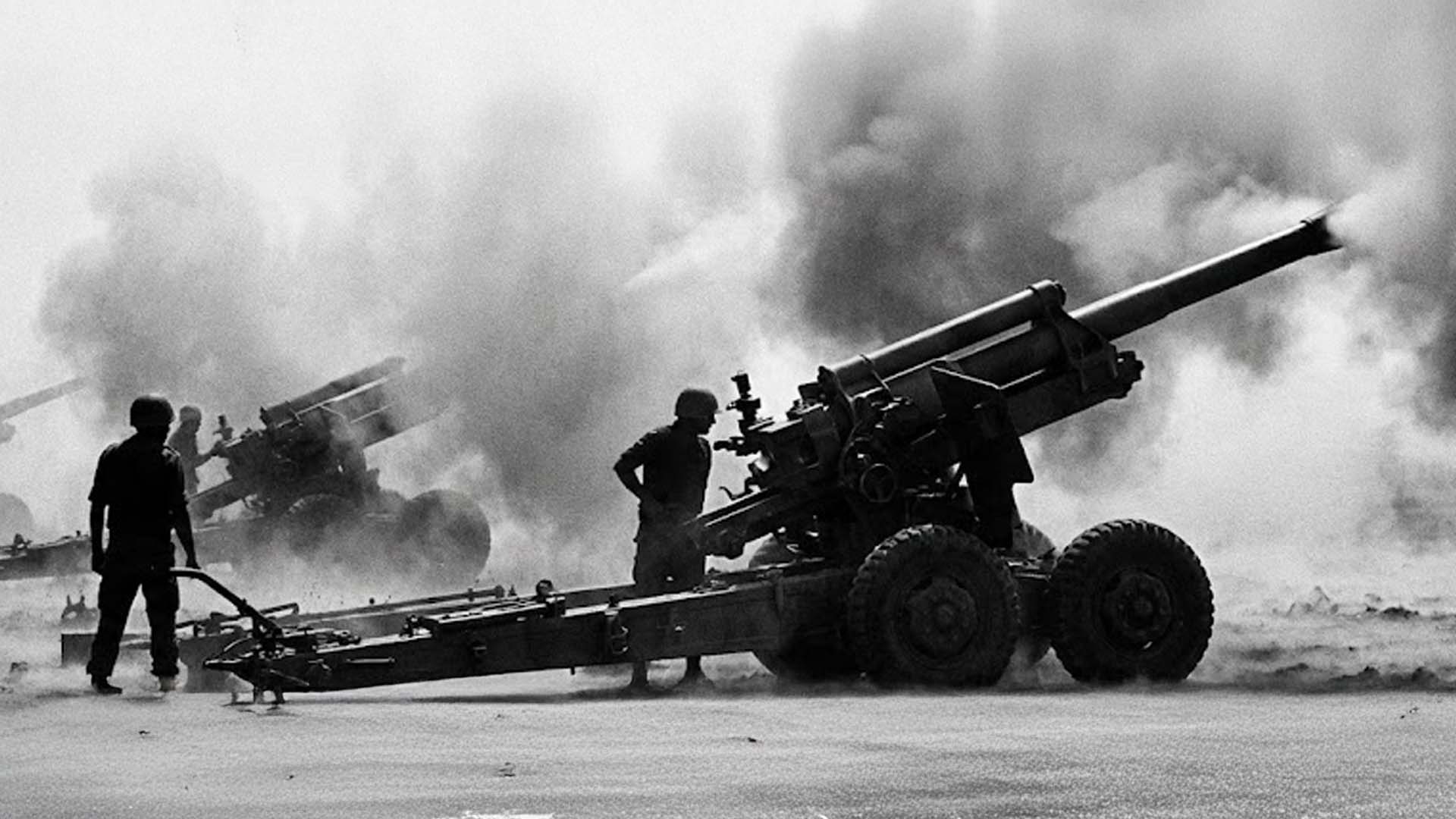
Caught off guard on the first day, Israel rebounded and ended the war with its artillery in range of both Cairo and Damascus — a military achievement still studied at West Point.
Yet despite this recovery, Israelis — who lost over 2,600 soldiers — regarded the Yom Kippur War as a national trauma.
The Egyptians, meanwhile, celebrated it as a glorious victory, even though they were ultimately defeated and lost 15,000 men.
For them, it restored national honor after the humiliation of 1967.
That perception made Anwar Sadat a hero in the Arab world — the warrior who redeemed Egypt’s pride.
Six years later, with his newfound credibility, Sadat joined Israeli Prime Minister Menachem Begin and U.S. President Jimmy Carter to sign the Egypt–Israel Peace Treaty — a peace that endures to this day.
— Michael Oren, author of “Six Days of War,” for Prager University.


Writers, other artists who are interested in taking part, we are here for any request, question, or idea